Services Products About Contact Gift Cards Blog Book Now
Ashiatsu Barefoot Massage

Sole Symphony

The broadest, most fluid pressure in massage — delivered by foot.

Ashiatsu is unlike anything you've experienced on the table. Using overhead bars for balance, your therapist applies full-foot pressure across large muscle groups — delivering a depth that hands simply can't match, yet with a flowing, even quality that never feels harsh or intrusive. If you've been searching for deep work that actually feels good, this is it.
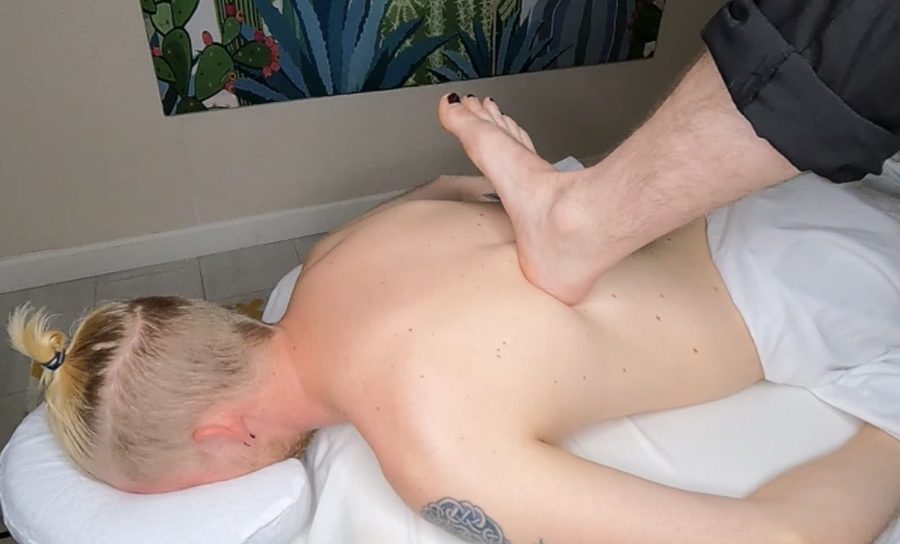
Ashiatsu Barefoot Massage at Awaken Zen Spa
Hero Image — Ashiatsu Session
Starting From
$85

Choose Your Experience

All Sole Symphony sessions use the same foundational ashiatsu approach — full-foot pressure, overhead bar technique, and intentional flow. The difference is time: more time means more coverage, deeper integration, and a longer-lasting result.

Introductory
Sole Symphony 60

A focused introduction to ashiatsu. Your therapist works the primary areas of tension — back, hips, and legs — using broad gliding strokes and targeted foot pressure. Ideal for first-timers who want to experience the modality before committing to a longer session. You'll leave with a clear sense of what this work can do.

60 min$85
Most Popular
Sole Symphony 90

The sweet spot. Ninety minutes allows for a full-body session — including the back, hips, legs, and arms — with time to linger where you need it most. Broad strokes ease the surface before deeper compression moves through the tissue. The result is both thorough and genuinely restorative.

90 min$115
Extended
Sole Symphony 120

Two full hours of ashiatsu bodywork. This session is designed for clients with complex tension patterns, those dealing with chronic tightness, or anyone who simply wants time on their side. Every area receives attention, transitions are unhurried, and the depth of integration leaves most clients feeling lighter than they have in years.

120 min$145

Broad, Intentional, Deeply Effective

Ashiatsu is a floor-based technique performed on a standard massage table. Your therapist uses overhead bars for stability and control, allowing them to channel precise amounts of body weight through the foot. Three principles shape every session.

01
The Foot as the Tool

The surface of the foot is far broader than any hand tool — elbow, knuckle, or thumb. That width distributes pressure across a larger area of muscle, creating a deep but diffuse quality that allows the tissue to soften without bracing. It's profound depth without the edge.

02
Body Weight, Not Muscle Force

Your therapist isn't pushing — they're allowing gravity to do the work. Overhead bars provide balance and fine-tune the amount of weight applied at any moment. This means the pressure is consistent, controlled, and sustained — very different from the intermittent effort of hand-based techniques.

03
Continuous Flow

Ashiatsu naturally lends itself to long, rhythmic gliding strokes — a movement quality that's hard to achieve with hands alone. That continuous flow brings the nervous system down, sets a meditative pace, and allows the deeper work to land without resistance.

The Philosophy Behind the Work

01
Surface First, Depth Earned

We never force our way into deeper tissue. Broad foot strokes warm and soften the superficial layers first — signaling to the nervous system that depth is safe. The body opens on its own terms.

02
Even, Sustained Pressure

Unlike pointed tools, the foot delivers pressure across a wide surface simultaneously. This evenness creates a distinct sensation — heavy but not sharp, deep but never uncomfortable. It's what clients remember most.

03
Gravity as Technique

The therapist's body weight is the instrument. Overhead bars allow moment-to-moment adjustment — more weight, less weight, a shift in angle. The depth is dialed, not driven.

04
Breath Throughout

An exhale drops the nervous system and softens the tissue beneath the foot. We guide breathing not as ritual, but as technique — using it to deepen the work and keep you present in your body.

05
Specificity Where It Counts

Broad strokes establish flow and coverage. But targeted work — with the heel, ball, or toes — addresses the specific patterns of tension that brought you here. Both have a place, and we move between them deliberately.

06
Continuous Listening

We read the tissue in real time — response, texture, holding patterns. Every session is adaptive. What your body shows us under the foot informs what happens next.

"Deep work doesn't have to feel like a battle. With the right tool and the right approach, the tissue invites the pressure in."
The Ashiatsu Philosophy — Awaken Zen Spa

What to Expect, Start to Finish

First-timers often ask what ashiatsu actually feels like moment-to-moment. Here's the shape of a typical session — from intake to aftercare.

00 – 05 min
Intake & Check-In
We review focus areas, pressure preferences, and any contraindications
05 – 20 min
Surface Warm-Up
Long gliding foot strokes establish flow and begin softening the outer layers
20 – 50 min
Deep Compression Work
Sustained foot pressure moves into the deeper muscle tissue with targeted holds
50 – 60 min
Integration & Closing
Broad strokes settle the nervous system and allow the work to integrate
Post-session
Recovery Guidance
Hydration, self-care, and rebooking recommendations
A note on timing

The breakdown above reflects a 60-minute session. For 90- and 120-minute bookings, all phases expand — especially the deep work and integration. More time means more coverage and a more complete result. If you carry tension across the full body, we recommend 90 minutes or more.

The Tools Within the Work

Ashiatsu draws on a range of foot-based movements — each suited to different tissue states, body areas, and depths of release. Your therapist selects and combines these fluidly throughout the session.

Gliding Foot Strokes

Long, slow strokes along the back and legs. These are the foundation of every session — they warm tissue, establish rhythm, and create the flow ashiatsu is known for.

Compression Holds

Sustained foot pressure applied to dense, held areas. The weight sinks gradually into the tissue rather than forcing — allowing deep layers to release on their own.

Heel Work

The heel's firm, bony surface targets specific knots and adhesions with precision. Used selectively in areas where focused depth is needed.

Ball-of-Foot Pressure

Broader than the heel, the ball of the foot creates firm, even pressure across larger muscle groups — ideal for the upper back, glutes, and hamstrings.

Toe Specificity

The toes can access narrow channels along the spine, shoulder blades, and IT band with a precision similar to thumb work — just with more inherent softness.

Lateral Strokes

Horizontal foot movements across the muscle fiber, rather than along it. These strokes break up adhesions and cross-fiber restrictions that longitudinal work can't reach.

Rhythmic Rocking

Gentle weight shifts from foot to foot create a rocking motion that calms the nervous system and loosens joints — particularly effective at the hips and sacrum.

Hip & Leg Opening

Passive hip openers and traction through the legs are uniquely possible in ashiatsu — the therapist's position allows leverage that creates space in the hip joint and down the leg.

Spinal Decompression

Parallel foot placement along the erector muscles creates bilateral compression that many clients describe as a gentle, satisfying elongation of the spine.

The Results of Ashiatsu

Clients consistently describe a specific quality after ashiatsu that's different from other massage — a depth of release paired with an unusual lightness. Here's what the work actually produces.

Deep, Even Muscle Release

The broad surface of the foot addresses larger muscle groups in a single stroke — releasing more tissue with less effort than targeted hand techniques. Dense areas like the thoracic back and glutes respond particularly well.

Improved Flexibility & Range of Motion

Hip openers, leg traction, and spinal decompression built into the session create a measurable increase in mobility — often noticeable immediately off the table and lasting for days.

Lasting Effects

Because ashiatsu accesses deeper tissue layers without the compensatory bracing that sharp pressure can cause, the results tend to hold longer. Many clients find they need fewer sessions over time.

Reduced Stress & Nervous System Reset

The slow, rhythmic quality of ashiatsu is uniquely effective at down-regulating the nervous system. Clients frequently report falling into a deep, almost trance-like relaxation even during the deepest pressure.

Enhanced Circulation & Lymphatic Flow

The compressive nature of foot pressure stimulates blood and lymphatic circulation throughout the treated areas, supporting recovery, reducing inflammation, and promoting a general sense of physical wellbeing.

Improved Posture & Alignment

Bilateral, symmetrical work along the spine — a hallmark of ashiatsu — encourages balanced muscle release across both sides of the body simultaneously, which is difficult to achieve with one-handed techniques.

Why Clients Call It
"The Best Deep Work" They've Had
Broader contact surface than elbow or knuckle pressure
60–120
Minutes of sustained, adaptive deep-tissue work
Zero
Hard elbows. All depth, none of the harshness.

Who Thrives with Ashiatsu

Sole Symphony is not a gentle relaxation massage. It's designed for people who want real depth — and for whom other deep tissue modalities have felt too sharp, too aggressive, or not quite satisfying. Here's who tends to love it most.

Ideal Clients
  • Deep tissue enthusiasts who want more coverage and fewer sharp edges
  • Clients with chronic back tension or thoracic tightness that resists hand work
  • Athletes and active individuals managing regular muscle fatigue
  • People with hip tightness or limited mobility who want structural opening
  • Anyone who has been told they "need more pressure" but found elbow or knuckle work uncomfortable
  • Clients who have tried ashiatsu elsewhere and want a skilled, intentional session
  • Massage regulars looking for a distinctly different — and deeply effective — experience
Not Recommended For
  • First-time massage clients seeking a gentle, introductory experience
  • Those who prefer very light or Swedish-style relaxation work
  • Clients uncomfortable with the sensation of body-weight pressure
Medical Contraindications
  • Recent surgery or open wounds in the treatment area
  • Osteoporosis or fragile bone structure
  • Active blood clots or deep vein thrombosis
  • Pregnancy (first trimester or high-risk)
  • Uncontrolled high blood pressure
  • Certain skin conditions or rashes in treatment areas

Not sure if this is right for you? Reach out before booking — we're happy to talk through it.

Getting the Most from Your Work

What you do in the 24–48 hours after a session shapes how much benefit you carry forward. Here's what we recommend.

Day of Session
Rest & Hydrate

Ashiatsu moves a significant amount of tissue and stimulates circulation. Drink water consistently throughout the rest of your day. Gentle walking is fine — intense exercise is not. Let the work settle.

Drink 2–3 extra glasses of water
24–48 Hours
Expect Some Soreness

Mild soreness in the days after a deep session is normal and healthy — it indicates the tissue was genuinely worked. Warm showers, gentle stretching, and rest will help it resolve. If soreness feels excessive, let us know.

Light stretching, warm compress if needed
Ongoing Care
Build a Rhythm

Single sessions produce results. Regular sessions produce change. For chronic tension patterns, we recommend every 3–4 weeks as a maintenance rhythm. For acute issues or high-output lifestyles, bi-weekly sessions accelerate results significantly.

Every 3–4 weeks for best results

Ashiatsu vs. Traditional Deep Tissue

Both modalities work deep. But how they get there — and how it feels — is quite different. This comparison helps you understand what makes ashiatsu distinct, and when each makes sense.

Our Service Sole Symphony Ashiatsu Barefoot Deep Tissue Traditional Hand-Based Swedish Relaxation Focused
Pressure Quality Broad & Even Full-foot contact distributes weight across large surface area Focused & Pointed Elbow, knuckle, or thumb — smaller contact, sharper sensation Light & Flowing Hands only, primarily relaxation-oriented
Depth Achieved Deep Without Discomfort Body weight creates consistent, adaptable depth Deep With Effort Can achieve depth but often requires sharp, concentrated pressure Superficial Not designed for deep tissue release
Session Feel Rhythmic & Meditative Long gliding strokes create flow throughout the session Targeted & Active More work-focused, less continuous flow Relaxing & Gentle Great for nervous system relaxation and light relief
Best For Deep work seekers who want flow Chronic back tension, full-body coverage, large muscle groups Specific, isolated tension Knots, adhesions, and localized dysfunction Stress & light tension Introduction to massage, general wellness
Post-Session Feel Light, Open, Deeply Rested Most clients describe feeling "taller" and unusually relaxed Released but possibly tender Effective but more post-session soreness common Calm & Relaxed Minimal soreness, less structural impact

Where the Work Happens

Ashiatsu requires a specially equipped room — overhead bars, a reinforced table, and the right atmosphere. Our dedicated ashiatsu room is designed to support the work and the experience.

Ashiatsu Room
Overhead Bars
Session in Progress
Entrance / Exterior

What Clients Say

Real words from people who've been on the table. We'll let them speak.

"Your client quote goes here — ideally something specific about the sensation, what surprised them, or how they felt afterward."

— Client Name · Sole Symphony

"Your client quote goes here — ideally something specific about the sensation, what surprised them, or how they felt afterward."

— Client Name · Sole Symphony

"Your client quote goes here — ideally something specific about the sensation, what surprised them, or how they felt afterward."

— Client Name · Sole Symphony

Paste real client reviews here — Google Reviews, direct quotes, or anything clients have shared with you.

Ready to Feel What
Ashiatsu Can Do?

Sole Symphony is one of our most requested services — and once clients try it, most come back. Book online now, or reach out if you'd like help deciding which session length is right for you.

Book Sole Symphony Give as a Gift