The Shift
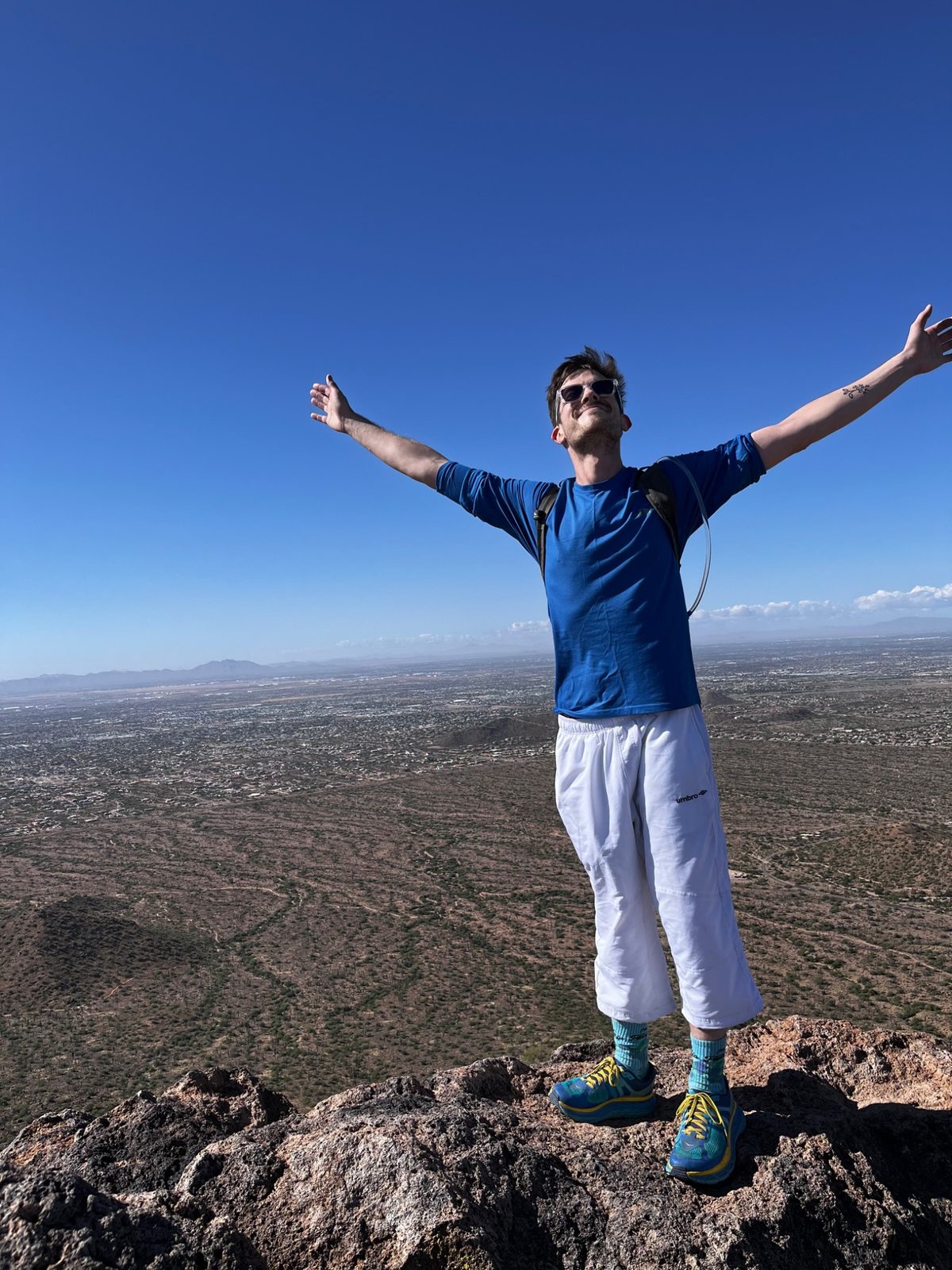
There is a moment in every session when something shifts.
It doesn't announce itself. It doesn't come from technique. It comes when I give myself permission to let go — to remember that I already know what I know, that I can be trusted with this.
When that happens, something releases in the room. The client feels it before I can name it. Their breath changes. Their tissue softens. What I can only describe as an invitation passes between us — not spoken, not decided. Just present.
That feeling is genuine. It is acceptance — of them, of me, of the moment exactly as it is. It is sinking.
It took me years to understand that this — not technique, not credentials, not the perfect sequence — is the work.
Becoming a massage therapist is not something that happens when you pass your boards. It is something that keeps happening, session by session, in the space between doing and being. It is a process of the body, the mind, and something harder to name. And it begins — honestly — with learning to get out of your own way.
The Body
Most people don't realize that massage therapy is physically demanding in a way that has nothing to do with strength.
Yes, there is stamina involved. Yes, your hands, forearms, and posture matter. But the deeper physical requirement is something less talked about: you have to feel good enough in your own body to be present in someone else's.
This is harder than it sounds. We carry our own tension, our own patterns, our own history in our tissues. Every therapist does. The work has a way of revealing that — sometimes mid-session, sometimes after, sometimes in the accumulation of a long week. Your body is your instrument. And like any instrument, it needs to be tended.
What I've learned — slowly, and not always gracefully — is that physical presence isn't about being perfect. It isn't about having no tension or no fatigue. It's about being aware of what's there. Feeling your feet on the floor. Feeling your breath. Knowing where you are in your own body before you make contact with someone else's.
You cannot offer grounded presence if you've abandoned yourself to get there.
That awareness is what allows connection. The table teaches you this. Clients feel everything — not just your pressure or your technique, but your quality of attention. Whether you're here or somewhere else. Whether your hands are listening or just moving.
Learning to inhabit yourself is the first discipline. Everything else follows from that.
The Mind
Massage school teaches you a great deal about the body. Origins and insertions. Contraindications. Pressure gradients. The logic of how tissue releases, how the nervous system responds, how compensation patterns form over years of held tension.
You learn to think carefully about what you're doing and why.
And then — if you're paying attention — you discover that thinking is only half of it.
There is a paradox at the center of this work that nobody quite prepares you for: you have to know enough to trust yourself, and then you have to let the knowing go. Not abandon it. Not pretend it isn't there. But hold it loosely enough that something else can move through.
The sessions where I'm monitoring — tracking, analyzing, managing — have a different quality than the sessions where I've settled. Both involve knowledge. But one is effortful in a way that creates distance. The other is effortful in a way that creates contact.
The mind wants to be useful. It wants to solve, to optimize, to ensure quality. And that impulse comes from a good place — from caring, from responsibility, from not wanting to let anyone down. But when the mind grips too tightly, it closes something.
What I've slowly learned is that presence isn't the absence of thought. It's thought that knows its place. Clinical knowledge underneath, awareness on top — and somewhere in the middle, the willingness to not know exactly what comes next.
That willingness is its own kind of intelligence.
The work asks you to balance logic with surrender. To walk into a room prepared, and then to set preparation down at the door. To trust that what you've learned hasn't left you just because you've stopped thinking about it.
That trust doesn't come quickly. It arrives in moments — brief, unmistakable — and then you spend the rest of your career learning to return to it.
The Spirit
There is a concept in Jin Shin Jyutsu — an ancient Japanese healing art — that the practitioner is not a healer in the conventional sense. You are more like a jumper cable. A conduit. Your presence completes a circuit that allows the other person's own intelligence to do what it already knows how to do.
I find this to be one of the most honest descriptions of what actually happens in a session.
When everything else falls into place — when the body is present, when the mind has loosened its grip — something else becomes possible. A quality of contact that isn't quite technique and isn't quite emotion. It's more like recognition. Two nervous systems meeting without agenda.
I don't have a clean secular word for it. Spirit is the closest I can get.
It isn't religious. It isn't mystical in a way that floats above the body. It's actually the most embodied thing I know — this sense of genuine meeting. Of accepting someone exactly where they are, without needing them to be further along, less guarded, less complicated. Of being accepted in return.
The table is an unusually honest place. People bring everything to it — their stress, their grief, their armor, their exhaustion. They bring patterns they don't know they have. And something about being received without judgment, without commentary, without fixing — something about that quality of attention — allows people to soften in ways they can't always access elsewhere.
That is the therapeutic connection. And it moves in both directions.
I leave sessions changed too. Not always in ways I can articulate. But the work has a way of asking something of you — of calling you toward your own best version, session by session, even when you fall short of it.
Especially when you fall short of it.
This is what I mean when I say massage therapy is spirit work. Not because it is sacred in a formal sense. But because it asks you to keep showing up — genuinely, vulnerably, openly — for another human being. And in doing so, it shapes you.
What the Work Reveals
There is something massage therapy does that I didn't expect when I started.
It shows you yourself.
Not in a dramatic way. Not all at once. But slowly, session by session, the work acts as a mirror. Your patterns surface. The places where you grip, where you perform, where you disconnect, where you over-effort — they all show up at the table. You cannot hide from yourself indefinitely in this work. The body keeps an honest record.
We live so much of our lives in our heads. Massage therapy pulled me into my body in a way nothing else had.
Most of us move through the world with only a vague awareness of what's happening below the neck — a dull ache here, tension we've normalized there, breath we forgot to take. We outsource sensation to symptom. We wait until something hurts badly enough to demand attention.
And working with bodies — being in daily contact with how people hold their lives in their tissue — deepened that. You begin to see compression patterns not just as physical phenomena but as stories. The shoulders that have been braced for years. The jaw that never fully releases. The breath that lives only in the upper chest, shallow and careful, as if taking up too much space might be dangerous.
Everyone carries something. Everyone has a pattern.
Including me.
That realization is humbling in the best way. It dissolves the distance between practitioner and client. You are not standing outside the human condition administering care to people who need it. You are inside it with them — working on your own held places, your own history, your own relationship to presence and vulnerability — while holding space for theirs.
The table reveals this. It has a way of asking: are you here? Not as a judgment. As an invitation.
And answering that question honestly — session after session, year after year — is what the process of becoming actually looks like.
Still Becoming
I am still becoming.
That is the truest thing I can say about this work. There is no arrival point. No session where everything finally clicks into place and stays there. There is only the ongoing practice of showing up — in your body, in your mind, in the quality of your attention — and offering that to another person.
Some days it flows. The circuit completes, the room quiets, something genuine passes between two people and both of them leave a little lighter. Those sessions remind me why I chose this.
Some days it's harder. The mind is loud. The body is tired. The permission to let go feels further away than usual. Those sessions teach me something too.
What I know now that I didn't know at the beginning is that the credential is just a door. Passing your boards, logging your hours, learning your anatomy — that is the beginning of the education, not the end of it. The real curriculum is the work itself. Every client. Every session. Every moment of genuine contact and every moment you fall short of it.
Not of a career. Of a process.
One that will ask more of you than you expect, reveal more about you than you anticipate, and give back in ways that are difficult to put into words.
The table will teach you. Trust that.
Show up, stay curious, and give yourself permission — again and again — to let go.
That is the work. That has always been the work.