Your Cart
Your cart is empty
Add a product to begin.
Free shipping on orders $60 and over.
Added to cart
Services Products About Contact Gift Cards Blog Book Now
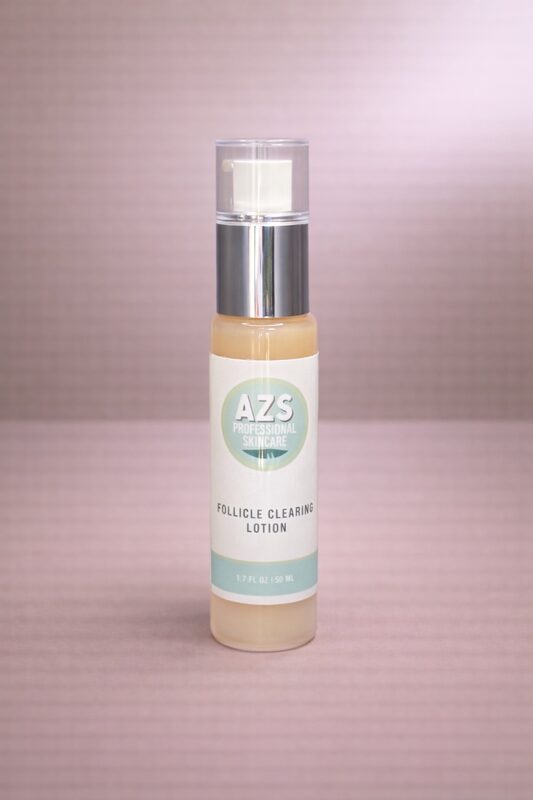
Follicle Clearing LOTION Glycolic · Salicylic · Willow Rosemary · Pine · Curcumin 4 oz · AZS

Facial Care · Clarifying Treatment

Follicle
Clearing
Lotion

Triple-Acid System · Willow Bark · Curcuminoid Buffer · Botanical Antimicrobials

A multi-pathway clarifying lotion built on the principle that congested follicles are never one problem. Glycolic acid works on the surface, salicylic acid penetrates the lipid-rich pore, and ammonium lactate softens the keratin plug that holds debris in place. Behind the acid system: a botanical antimicrobial layer (rosemary, cinnamon, pine, lemon), a polyphenol antioxidant layer (bilberry, pomegranate, ginseng), and a soothing buffer of tetrahydrocurcuminoids, bisabolol, allantoin, and aloe that makes the actives tolerable for daily use. 4oz lasts 2–3 months on face, back, or chest.

Glycolic + Salicylic Willow Bark Ammonium Lactate Tetrahydrocurcuminoid Botanical Antimicrobial Liposomal Delivery
$38 4 oz · 118 ml · 2–3 months
Qty
1
Used in AZS facial services →
Triple Exfoliation
Glycolic, salicylic, lactic — different depths, different targets
Follicle-Targeted
Salicylic + lipid actives penetrate into the pore
Curcuminoid Buffer
Tetrahydrocurcumin calms acid reactivity
Free Shipping Over $60
Complimentary shipping on qualifying orders
The Triple-Acid Story

Follicle congestion is never
one kind of blockage.

What looks like a single category of "breakout" or "congestion" on the surface is actually three separate structural problems happening in the same place: the outermost corneocytes not shedding on schedule, the sebum and keratin debris compacting inside the follicle itself, and the protein-level keratin plug that physically holds the debris in position. A single acid addresses one of these. Three acids, chosen for their different solubilities and targets, address all three at once.

Glycolic acid — the smallest AHA — is water-soluble and works on the surface layer, dissolving the desmosomal bonds that hold dead corneocytes to each other and accelerating turnover. Salicylic acid is oil-soluble, so it penetrates the lipid-rich interior of the follicle where water-based acids cannot reach — the only one of the three that actually enters the pore. Ammonium lactate, the gentle lactic-acid salt, operates at the protein level, softening the keratin that forms the plug and improving humectant hydration of the surrounding skin.

Added to these three direct acids is Willow Bark, a natural salicylate precursor that extends the salicylic-acid activity profile with a slower-releasing, gentler delivery. The four-acid architecture delivers more comprehensive exfoliation than any single acid at higher concentration — with substantially less irritation.

Single-Acid Treatment
One acid, one mechanism
High concentration of one acid for effect
One depth of action, one target
Irritation scales with concentration
Often requires off-days to recover
Post-use redness and sensitivity common
Follicle Clearing Lotion
Four-acid, three depths
Glycolic clears the surface corneocytes
Salicylic penetrates into the follicle
Ammonium lactate softens the plug
Willow bark extends BHA activity, gentler
Curcuminoid + bisabolol buffer reduces reactivity
The Buffer System
Tetrahydrocurcuminoids
Hydrogenated Curcumin Complex
The ingredient that determines whether this formula is daily-tolerable or reserved for once-a-week use. Tetrahydrocurcuminoids are the colorless, stable, hydrogenated form of curcumin — the primary active compound of turmeric. Unlike standard curcumin, which stains yellow and degrades rapidly in formula, the tetrahydro form is shelf-stable, non-staining, and research-documented to have stronger anti-inflammatory activity than its parent compound. In a multi-acid formula, the curcuminoid buffer accomplishes two distinct jobs: it reduces the low-grade inflammatory response that acids and exfoliation naturally trigger (making the lotion tolerable nightly rather than weekly), and it provides potent antioxidant activity that protects the skin from oxidative stress generated during the turnover process itself. Paired with bisabolol, allantoin, and aloe, the buffer system is not a passive bystander — it is what makes the acid system gentle enough to use consistently, which is what produces results.
01
PM use, after cleansing
Apply at night after cleansing to dry skin. The acids in this formula make PM application the correct choice — UV exposure during the day would compound photosensitivity from the AHAs.
02
Press-pump 1–2 times into palm
Dispense one to two pumps into the palm. For a full face, one pump is sufficient; for face + neck or back/chest use, two. The formula is concentrated — more does not accelerate results, and can increase irritation.
03
Apply — avoid eye area
Spread with flat fingertips across the target area, avoiding the immediate eye contour. On the face, apply over the entire surface, not just active breakouts — the full-area treatment prevents new congestion from forming.
04
Wait 5 minutes, then moisturize
Allow the acids a full five minutes to work before applying your moisturizer. Follow with SPF in the morning — this is essential for any AHA/BHA routine. Without daytime SPF, the photosensitivity the acids produce will undo the progress each day.
The Antimicrobial Layer

Exfoliation is half the work.
The other half is
addressing the cause.

Follicle congestion has two layered causes: the structural one (keratin and debris compacting in the pore), and the microbial one (the naturally occurring skin bacteria that feed on sebum and contribute to the inflammatory cascade when follicles become anaerobic). A formula that addresses only the structural half will clear existing congestion but leave the underlying microbial conditions unchanged — and the congestion returns. This lotion treats both.

The antimicrobial layer is botanical, not synthetic. Rosemary leaf extract carries carnosic and rosmarinic acids with documented antimicrobial activity. Cinnamon bark contributes cinnamaldehyde, one of the most effective natural antimicrobial compounds studied. Pine needle bark extract provides pinene and other terpenoids with broad-spectrum activity. Lemon fruit extract adds citric acid and limonene. Lavender oil and extract round out the complex with linalool and linalyl acetate — both mild antimicrobials and the formula's primary aromatic signature. Caprylic acid — a C8 medium-chain fatty acid — provides direct antimicrobial activity at the sebum-film level where synthetic preservatives cannot reach.

These ingredients are not in the formula at cosmetic trace levels. Each is at a concentration where its mechanism is active against the microbial layer contributing to follicle congestion, working alongside the acids that clear the structural component.

Why Botanical Antimicrobials Over Benzoyl Peroxide
Benzoyl peroxide is effective at the microbial layer but comes with real costs: bleaching of fabric and hair, free-radical generation at the skin surface, and barrier disruption that often requires a separate repair regimen. The botanical antimicrobial complex in this formula addresses the same targets without those drawbacks, and layers safely with the AHA/BHA acid system rather than competing with it for tolerability. The result is a lotion that clears congestion without trading away the skin's overall condition in the process.
Three Acid Mechanisms

The same category.
Three different
depths.

The acids in this formula are chosen for their solubility profile — the single most important variable in determining where an acid works. Water-soluble acids clear the aqueous surface layers. Oil-soluble acids penetrate the lipid-rich follicle interior. Salt-form acids act at the protein level. Using all three simultaneously delivers more thorough exfoliation than any one acid at higher concentration.

Water-Soluble · Surface
Surface AHA
Glycolic Acid
The smallest alpha-hydroxy acid molecule — small enough to penetrate the stratum corneum efficiently but water-soluble, which keeps its activity at the surface and near-surface layers. Dissolves the desmosomal bonds that glue dead corneocytes together, accelerating surface turnover. Sourced here alongside natural glycolic content from sugarcane extract.
Oil-Soluble · Into the Follicle
BHA Targeted
Salicylic Acid
The only acid in this formula that penetrates into the follicle itself. Salicylic acid is oil-soluble — its lipid compatibility allows it to pass through the sebum at the pore opening and reach the compacted debris inside. Also mildly anti-inflammatory, reducing the reactive flare often associated with congestion. Works alongside Willow Bark, which releases salicylates more gradually.
Salt Form · Protein-Level
Keratolytic
Ammonium Lactate
The ammonium salt of lactic acid — gentler than free lactic acid but still keratolytic at the protein level. Softens the keratin plug that holds the follicle debris in place, allowing the salicylic acid to clear it more effectively. Also a significant humectant in its own right, drawing moisture into the surrounding skin and reducing the post-exfoliation dryness that other acid systems can produce.

The three acids are supported by two natural sources of additional acid activity: Sugarcane Extract contributes its own glycolic content in a plant-matrix form alongside the purified glycolic acid, and Willow Bark Extract releases salicin — a natural salicylate precursor — more gradually than the direct salicylic acid. The staggered release profile from these natural complements extends the formula's activity timeline without raising the peak concentration at any single moment.

Six functional systems.
One clearing protocol.

Beyond the acid architecture, six additional systems address the microbial layer, polyphenol protection, anti-inflammatory buffering, mineral regulation, barrier-supporting amino acids, and liposomal delivery of the lipid-soluble actives. Each addresses a distinct contributor to follicle congestion, and the layering is why the full formula produces results a single-acid product cannot.

Triple-Acid Exfoliation
Glycolic + Salicylic + Lactic
Glycolic Acid · Salicylic Acid · Ammonium Lactate · Willow Bark
The core exfoliation architecture. Glycolic acid, at a small molecular weight and water solubility, targets the surface corneocyte layer and accelerates the shedding of dead skin cells that dull texture and contribute to surface congestion. Salicylic acid, oil-soluble, is the only ingredient in this formula that actually penetrates into the follicle interior — its lipid compatibility allows it to work at the site of the pore itself, where water-based acids cannot reach. Ammonium lactate softens the keratin plug at the protein level, making physical clearing of the follicle possible. Willow Bark extract supplements the salicylic-acid activity with a slower-releasing salicylate precursor, extending the BHA timeline gently. Four acids working at three distinct depths — surface, lipid interior, protein keratin — deliver more comprehensive exfoliation than any single-acid product at higher concentration.
Botanical Antimicrobial Complex
Rosemary · Cinnamon · Pine · Lemon
Multi-botanical extract system + Caprylic Acid
The antimicrobial half of the clearing protocol. Follicle congestion has both a structural component (keratin and debris) and a microbial component (the naturally occurring skin bacteria that contribute to inflammatory response when follicles become anaerobic). This botanical complex addresses the microbial side without the barrier-damaging side effects of benzoyl peroxide. Rosemary contributes carnosic and rosmarinic acids with documented antimicrobial activity; cinnamon bark provides cinnamaldehyde, one of the most effective natural antimicrobial compounds; pine needle bark delivers terpenoid antimicrobials; lemon fruit adds citric acid and limonene. Caprylic acid — a C8 medium-chain fatty acid — operates at the sebum-film level where many synthetic antimicrobials cannot reach. Together, these ingredients address the microbial contributor while the acids address the structural one.
Polyphenol Antioxidant Layer
Bilberry · Pomegranate · Ginseng
Fruit OPCs + Ginsenoside Complex
Exfoliation inherently generates oxidative stress at the skin surface — the turnover process itself produces free radicals, and newly exposed cells are temporarily more vulnerable to oxidative damage. The polyphenol layer in this formula exists to address that vulnerability. Bilberry leaf contributes anthocyanins and oligomeric proanthocyanidins (OPCs) that are among the most potent antioxidants studied in the plant kingdom. Pomegranate fruit extract adds punicalagins and ellagic acid — documented for their role in repairing photodamage and reducing post-inflammatory hyperpigmentation, particularly relevant when clearing previous acne marks. Ginseng root extract, with its characteristic ginsenosides, improves microcirculation at the dermal level and contributes adaptogenic support during the skin's repair cycle. Together they protect the newly exposed surface layer and accelerate the resolution of post-blemish discoloration.
Soothing Buffer · Anti-Inflammatory
Bisabolol + Allantoin + Aloe
Multi-component soothing complex
The reason this formula can be used daily rather than once a week. Bisabolol — the primary active compound of chamomile — is one of the most well-established anti-inflammatory ingredients in cosmetic formulation, specifically effective at reducing the reactive flare that acids naturally trigger. Allantoin is keratolytic in a complementary way to the acids (it accelerates shedding of damaged cells rather than dissolving bonds), and is notably anti-irritant and cell-proliferating. Aloe vera provides acemannan polysaccharides with documented wound-healing and anti-inflammatory activity plus additional humectancy. Alongside the tetrahydrocurcuminoids, these three ingredients form a soothing buffer that matches the intensity of the acid system with proportionate calming activity — which is what makes consistent daily use possible, and consistent daily use is what produces measurable results.
Curcuminoid Buffer · Non-Staining
Tetrahydrocurcuminoids
Hydrogenated Curcumin Complex
The colorless, shelf-stable, hydrogenated form of curcumin — turmeric's primary active compound. Standard curcumin stains everything it touches yellow and degrades rapidly in aqueous formulations, which is why most "turmeric skincare" contains curcumin at purely symbolic levels. The tetrahydro form solves both problems: it is non-staining, shelf-stable across the full product life, and research-documented to have stronger anti-inflammatory activity than its parent compound. In this formula it plays two roles: it's a core component of the soothing buffer that makes the acid system daily-tolerable, and it provides potent antioxidant activity that specifically targets the oxidative stress generated during cell turnover. Paired with bisabolol and allantoin, it is the ingredient that most directly determines whether users can tolerate nightly use — and nightly use is what drives results in a formula like this one.
Sebum Regulation · Barrier Support
Zinc Gluconate + Amino Acids
Zinc Gluconate + Proline + Arginine + Panthenol
The final layer — mineral and amino acid support for the skin's structural and regulatory functions. Zinc in the gluconate form is documented for sebum regulation (reducing the over-production that contributes to congestion in the first place), antimicrobial activity that complements the botanical complex, and cofactor support for over 300 enzymes including those involved in wound healing and barrier repair. Proline and arginine are both amino acids with distinct roles: proline is a precursor to hydroxyproline, which is central to collagen synthesis (relevant here because exfoliation stimulates underlying collagen turnover), while arginine supports nitric-oxide-mediated microcirculation and barrier function. Panthenol — provitamin B5 — rounds out the barrier-support layer with deep humectant and anti-inflammatory activity. These ingredients are not the drivers of the clearing effect, but they are the difference between skin that is cleared-but-depleted and skin that is cleared-and-healthy.

Thirty-three ingredients.
Every one named.

No percentages — formulation ratios are proprietary — but every ingredient by name, phase, and function. The only fragrance contributor is lavender oil, listed by name. No "fragrance," no "parfum," no undisclosed actives.

Phase A · Water Base
Water (Aqua)
Purified water — the aqueous solvent for the water-soluble actives (glycolic acid, ammonium lactate, amino acids, zinc gluconate, botanical extracts). The base through which the liposome delivery system is suspended.
Phase A · Humectant
Glycerin
The foundational humectant. Draws and holds moisture at the skin surface, offsetting the potential drying effect of the acid system. Also stabilizes the aqueous actives in solution. Plant-derived, non-comedogenic, compatible with every other ingredient in the formula.
Phase A · Humectant
Propanediol
1,3-Propanediol from corn fermentation — lighter and faster-absorbing than glycerin. Contributes humectancy and functions as a penetration-enhancer for the water-soluble actives. Pairs with glycerin to provide both surface moisture and rapid uptake of the acid system.
Phase B · AHA System
Surface Exfoliant
Glycolic Acid
The smallest AHA — water-soluble, targets the surface corneocyte layer. Dissolves desmosomal bonds that hold dead cells to each other, accelerating turnover and revealing clearer skin beneath. Also stimulates underlying collagen turnover over time.
Phase B · BHA System
Into the Follicle
Salicylic Acid
The only acid here that penetrates the follicle itself — oil-soluble, passes through the sebum at the pore opening to reach compacted debris inside. Mildly anti-inflammatory, reducing reactive flares from active congestion.
Phase B · Acid System
Keratin Softener
Ammonium Lactate
The ammonium salt of lactic acid — gentler than free lactic but still keratolytic at the protein level. Softens the keratin plug holding follicle debris in place. Also a significant humectant, drawing moisture into the surrounding skin.
Phase B · Natural AHA
Sugarcane Extract
Natural source of glycolic acid in plant-matrix form — provides a gentler secondary AHA activity alongside the purified glycolic acid. The extract also carries micronutrients and sugars that contribute humectancy and gentle surface softening.
Phase B · Salicylate Precursor
Willow Bark Extract
Source of salicin — a natural salicylate precursor that releases salicylic acid more gradually than the direct form. Extends the BHA activity profile with a slower, gentler delivery. Also contributes its own polyphenol antioxidant content to the formula.
Phase B · Natural AHA
Lemon Fruit Extract
Contributes citric acid and limonene. Citric acid adds a gentle secondary AHA activity; limonene contributes antimicrobial activity to the botanical complex. The extract is at functional concentration, not a cosmetic trace.
Phase C · Antimicrobial Botanicals
Rosemary Leaf Extract
Carnosic acid and rosmarinic acid — two of the most effective antimicrobial and antioxidant compounds in the culinary-herb family. Addresses the microbial contributor to follicle congestion while protecting formula lipids from oxidation.
Phase C · Antimicrobial Botanicals
Cinnamon Bark Extract
Cinnamaldehyde is one of the most documented natural antimicrobial compounds studied. Broad-spectrum activity against the microbial contributors to follicle congestion. Also contributes mild circulation-supporting activity at the skin surface.
Phase C · Antimicrobial Botanicals
Pine Needle Bark Extract
Pinene, limonene, and other terpenoids with broad-spectrum antimicrobial activity. Pine also contributes proanthocyanidins — polyphenol antioxidants that supplement the bilberry and pomegranate layer.
Phase C · Antimicrobial Fatty Acid
Caprylic Acid
C8 medium-chain fatty acid with documented antimicrobial activity at the sebum-film level. Reaches a target other antimicrobials cannot — the lipid film at the pore opening where microbial populations contribute to congestion.
Phase D · Polyphenol Antioxidants
Bilberry Leaf Extract
Anthocyanins and OPCs (oligomeric proanthocyanidins) — among the most potent plant-derived antioxidants studied. Protects the newly-turned-over skin surface from oxidative stress generated during exfoliation.
Phase D · Polyphenol Antioxidants
Pomegranate Fruit Extract
Punicalagins and ellagic acid — documented for repairing photodamage and reducing post-inflammatory hyperpigmentation. Particularly relevant for clearing the discoloration left behind by previous blemishes.
Phase D · Circulation Support
Ginseng Root Extract
Ginsenosides improve microcirculation at the dermal level, accelerating delivery of nutrients during the skin's repair cycle and supporting the resolution of post-blemish marks. Adaptogenic support for stressed skin.
Phase E · Anti-Inflammatory Buffer
Non-Staining Curcumin
Tetrahydrocurcuminoids
The colorless, shelf-stable, hydrogenated form of curcumin. Stronger anti-inflammatory activity than parent curcumin, without staining or instability. The ingredient that most directly makes the acid system daily-tolerable.
Phase E · Anti-Inflammatory Buffer
Bisabolol
Chamomile's primary active compound. One of the most well-established anti-inflammatory ingredients in cosmetic formulation. Specifically effective at reducing reactive flares triggered by acid systems.
Phase E · Anti-Inflammatory Buffer
Allantoin
Keratolytic, cell-proliferating, anti-irritant. Complements the acids with protein-level shedding activity. Notably non-irritating at active concentrations, contributes to the formula's daily-tolerable profile.
Phase E · Anti-Inflammatory Buffer
Aloe Vera Leaf
Acemannan polysaccharides contribute wound-healing, anti-inflammatory, and humectant activity. Softens the skin's response to the active stack and contributes a cooling, calming sensory quality on application.
Phase F · Barrier Support
Panthenol (Provitamin B5)
Converts to pantothenic acid on skin. Deep humectant, barrier-supporting, and anti-inflammatory. Softens the skin's response to the acid system while contributing its own repair activity during the overnight cycle.
Phase F · Amino Acid
Proline
Precursor to hydroxyproline — the amino acid that is central to collagen synthesis. Relevant here because exfoliation stimulates underlying collagen turnover; providing the building blocks improves the quality of that turnover.
Phase F · Amino Acid
Arginine
Supports nitric-oxide-mediated microcirculation and contributes to barrier function. Also a component of the skin's own natural moisturizing factor (NMF), improving tolerability of the acid system through enhanced surface hydration.
Phase F · Mineral Cofactor
Zinc Gluconate
Topical zinc in the gluconate form — documented for sebum regulation, antimicrobial activity, and wound-healing enzyme cofactor support. Addresses the sebum-production end of the congestion cycle alongside the acids clearing the existing blockage.
Phase G · Delivery System
Liposomal Encapsulator
Phosphatidylcholine
The primary phospholipid of cell membranes. Spontaneously forms liposomes that encapsulate the lipid-soluble actives (salicylic acid, caprylic acid, the botanical terpenoids) and carry them through the stratum corneum intact to their target depth — particularly relevant for reaching the follicle interior.
Phase H · Aromatic Active
Lavender Flower Extract
Linalool and linalyl acetate — mild antimicrobials with a long-documented calming aromatic profile. Extends the antimicrobial complex and contributes to the formula's primary aromatic signature.
Phase H · Aromatic Active
Lavender Oil
Steam-distilled essential oil at trace aromatic levels. The formula's only fragrance source — no synthetic fragrance, no parfum. Pairs with lavender flower extract for a dual water-soluble and lipid-soluble lavender profile.
Phase I · Texture
Xanthan Gum
Plant-derived polysaccharide. Provides the lotion's light, flowing body while keeping the active stack in even suspension. Non-comedogenic, absorbs completely without residue.
Phase I · Chelator
Sodium Phytate
Natural-derived chelating agent from rice bran. Binds trace metal ions in the formula, protecting the polyphenol actives (bilberry, pomegranate, rosemary) from oxidation and stabilizing the acid pH system. The natural alternative to synthetic EDTA.
Phase J · Preservation
Phenoxyethanol
Broad-spectrum preservative effective against bacteria, yeast, and mold. Used at conservative concentration within the formula's acid pH range. Paraben-free, formaldehyde-free alternative required for a formula with this much botanical and water content.
Phase J · Preservation
Ethylhexylglycerin
Glyceryl ether — preservation booster and skin-conditioning agent. Works alongside phenoxyethanol and potassium sorbate for broad-spectrum coverage. Contributes to smooth application feel.
Phase J · Preservation
Potassium Sorbate
Natural-derived preservative effective against yeast and mold. Paired with phenoxyethanol for comprehensive coverage. Well-tolerated, food-grade safe.
Phase J · Preservation
Benzyl Alcohol
Naturally occurring in many essential oils, including jasmine and ylang-ylang. Broad-spectrum preservative and a light natural solvent that supports the lipid-soluble actives' dispersion in the formula.
On transparency: Every ingredient named and explained. No percentages — our formulation ratios are proprietary. No "fragrance," no "parfum," no undisclosed actives. The formula's aromatic character comes entirely from lavender oil and the botanical extracts (rosemary, cinnamon, lemon, pine) — each listed here by name. The acid system is formulated at tolerable pH with full buffer support; patch-test recommended on first use.

Clearing is never
a single mechanism.

Follicle Decongestion
Salicylic acid reaches inside the follicle; ammonium lactate softens the keratin plug; glycolic clears the surface; willow bark extends BHA activity. Four-acid architecture addresses congestion at the structural level while the botanical antimicrobial complex addresses the microbial half of the same problem.
Refined Surface Texture
Consistent use produces a visibly smoother skin surface through accelerated corneocyte turnover. Fine roughness, dullness, and the bumpy texture of early-stage congestion resolve over two to four weeks. Allantoin and the curcuminoid buffer prevent the flaky or red-patch transition period common with other acid regimens.
Fades Post-Blemish Marks
Pomegranate's ellagic acid and punicalagins directly address post-inflammatory hyperpigmentation. Bilberry's OPCs protect the newly turned-over skin from the oxidative stress that would otherwise darken healing marks. Ginseng's circulation support accelerates the resolution cycle. The result: breakout marks fade faster than they would through exfoliation alone.
Addresses the Microbial Layer
Rosemary, cinnamon, pine, lemon, and caprylic acid form a botanical antimicrobial complex that works alongside the acids to address the microbial contribution to follicle congestion — without the bleaching, free-radical generation, and barrier disruption of benzoyl peroxide. Treats the cause, not only the symptom.
Gentle Enough for Daily Use
Tetrahydrocurcuminoids, bisabolol, allantoin, aloe, and panthenol form a buffer system that matches the intensity of the acid layer. The soothing complex reduces the reactive flare that other acid products require off-days to recover from, making consistent nightly use viable — which is the routine that actually produces measurable results.
Face, Back, Chest, Arms
Formulated to be body-appropriate as well as face-appropriate. The same clearing mechanisms apply to bacne, chest congestion, and the keratosis-pilaris-type texture on the upper arms. One bottle replaces a separate body treatment. At 4oz, the size reflects full-body usability for the full two- to three-month cycle.
Follicle Clearing Lotion 4 oz · AZS

Nightly application.
Build tolerance gradually.

Acid treatments work through consistency, not intensity. Building a nightly tolerance over two to three weeks produces better results than applying more product less often. The buffer system in this formula is designed specifically to make that gradual ramp-up possible.

PM use only — after cleansing
Apply at night after cleansing, to dry skin. The acid system and photosensitizing botanical extracts make PM application essential — daytime use plus UV would compound photosensitivity. If using during the day for any reason, SPF is non-negotiable.
Build up: 3 nights/week, then every other, then nightly
For the first two weeks, use three nights per week with off-days in between. For weeks three and four, use every other night. From week five onward, use nightly as tolerated. This ramp-up allows the skin to develop tolerance to the acid system gradually — which is what avoids the reactive flare that sends people away from acid routines prematurely.
One pump for face, two for larger areas
One press-pump is sufficient for the full face. For face-and-neck or body areas (back, chest, upper arms), use two. Dispense into the palm; spread with flat fingertips across the target area, avoiding the immediate eye contour and lips.
Full-area application — not spot-only
Apply across the entire treatment zone, not only to visible breakouts. The purpose of the acid system is to address the underlying conditions that cause congestion, which means treating the whole area prevents the next round from forming. Spot-only use addresses symptoms, not the cause.
Wait 5 minutes, then moisturize · SPF every morning
Allow the acids a full five minutes to work before applying your moisturizer. Berry Barrier Cream is a particularly good pairing — its barrier-repair mechanism directly addresses what the acid system temporarily depletes. Morning SPF is essential: without it, the overnight work is partially undone each day.
A note on usage & contraindications
A 4oz bottle with one to two pumps per application provides approximately 60–90 uses — two to three months of nightly use, longer if used intermittently or only on targeted areas. Patch-test on the inner forearm for 48 hours before first facial application. Not recommended during pregnancy or nursing due to the salicylic acid content. Discontinue if persistent burning, stinging, or visible irritation occurs. Compatible with retinoid routines when alternated on different nights; avoid same-night use with Collagen Revival Serum.

You May Also Like

Berry Barrier
Berry Barrier Cream Moisturizer
The ideal moisturizer after an acid treatment. The Olivem 1000 emulsion provides direct barrier support that addresses exactly what the acid system temporarily depletes, and the strawberry hydrosol base contributes additional antioxidant protection. The pairing dramatically improves daily tolerability of the lotion.
Collagen Revival
Collagen Revival Serum
The companion PM treatment — alternate on different nights for a comprehensive routine. Collagen Revival rebuilds what the acid system clears, with triple Vitamin C, retinyl palmitate, and Gotu Kola for collagen stimulation. Do not use same-night; alternating nights is the intended protocol.
Grapefruit Grove Botanical Wash
The cleanser that begins the PM routine. Removes the day's SPF, sebum, and environmental residue without stripping the barrier lipids — essential before applying a concentrated acid treatment. The Saccharide Isomerate and Beta-Glucan deposit a layer of hydration that improves the lotion's tolerability on first use.