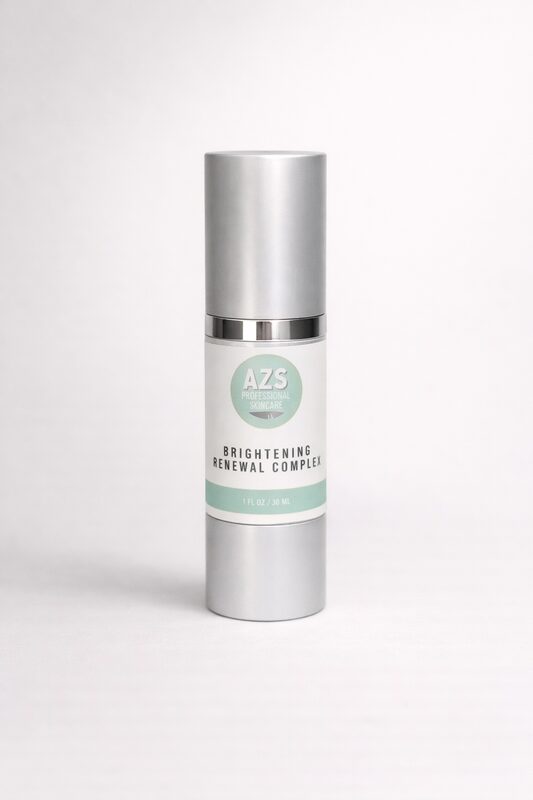
Phase A · Water Base
Deionized Water
Aqua. Purified water with mineral ions removed — the entire water base of this formula. Deionized rather than distilled to prevent trace mineral interactions with the acid actives and preserve the stability of the preservative system.
Phase B · Acids
Lactic Acid
Alpha-hydroxy acid. Dual-function exfoliant and humectant — disrupts corneodesmosomes to shed pigmented surface cells while simultaneously drawing moisture into the stratum corneum. The gentler of the two AHAs in this formula, working primarily at the outermost skin layer.
Phase B · Acids
Mandelic Acid
Large-molecule AHA from bitter almonds. Slower penetration rate than Lactic Acid due to its larger molecular weight — produces more controlled exfoliation with substantially less irritation risk. Preferred for sensitive skin, melasma, and darker skin tones. Complements Lactic Acid by operating at a slightly deeper pace.
Phase C · Humectants
Propanediol
1,3-Propanediol from corn fermentation. Lightweight humectant and penetration-enhancer — faster-absorbing than glycerin and improves the delivery of adjacent actives into the skin. Also functions as a mild solvent for the acid phase, contributing to formula stability.
Phase C · Humectants
Butylene Glycol
A skin-conditioning humectant that draws and holds moisture in the surface layers of the skin. Also functions as a solvent and skin-feel modifier — it reduces the potentially sticky texture that glycerin-heavy formulas can produce, giving this serum its smooth, non-tacky finish.
Phase D · Brightening Actives
Niacinamide
Vitamin B3. Inhibits melanosome transfer to keratinocytes (reducing visible pigmentation), supports ceramide synthesis in the barrier, reduces sebum production, and calms inflammatory reactivity. Four independent mechanisms in one ingredient — and the formula's primary barrier-reinforcing active during the acid exfoliation cycle.
Phase D · Brightening Actives
Azelaic Acid
Dicarboxylic acid with clinically proven efficacy for melasma and hyperpigmentation. Competitively inhibits tyrosinase, reducing melanin production in overactive areas. Anti-inflammatory and antimicrobial properties break the post-blemish pigmentation cycle. Considered one of the safest brightening actives across all skin tones.
Phase D · Brightening Actives
Tyrosinase Inhibitor
Alpha Arbutin
Glucoside derivative of hydroquinone — the stable, bioavailable form. Inhibits tyrosinase through a different binding mechanism than Azelaic Acid, creating mechanistic redundancy in melanin synthesis inhibition. Stable at the pH range of this formula. Delivers consistent brightening without the cytotoxicity associated with hydroquinone at high concentrations.
Phase D · Botanicals
Witch Hazel Leaf Extract
Hamamelis Virginiana leaf extract (not the common distillate). Retains a broader polyphenol fraction including proanthocyanidins and flavonoids. Anti-inflammatory and toning — counteracts the transient reactivity produced by the exfoliating acids, reduces post-application redness, and tightens the appearance of pores during active exfoliation cycles.
Phase D · Botanicals / NMF
Sodium PCA
A component of the skin's own Natural Moisturizing Factor (NMF). Exceptionally hygroscopic — draws moisture from the environment into the skin continuously throughout the day. In Arizona's low-humidity climate, this environmental moisture-drawing is particularly effective. One of the best-tolerated humectants available, as it mirrors the skin's own chemistry.
Phase E · Peptide Actives
Proprietary
OptiBright Peptide
Oligopeptide-34. Modulates melanogenesis signaling at the receptor level — reducing melanocyte sensitivity to MSH and UV-triggered signals before melanin production begins. The most upstream brightening mechanism in this formula. Works at a different entry point than all other brightening actives present. Stable in acidic aqueous formulations.
Phase E · Peptide Actives
Phosphatidylcholine
A phospholipid that is a key structural component of cell membranes. Functions as a skin-conditioning penetration enhancer — its lipid bilayer affinity improves the delivery of adjacent actives through the stratum corneum. Also contributes barrier repair activity by providing phospholipid precursors for membrane regeneration in freshly exfoliated skin cells.
Phase E · Hydration
Sodium Hyaluronate
The sodium salt of hyaluronic acid — smaller molecular weight allows penetration beyond the surface. Holds up to 1,000× its weight in water. Compensates for the transepidermal water loss (TEWL) increase caused by exfoliating acids, keeping hydration levels stable during the exfoliation cycle. The formula's primary deep-layer water-binding agent.
Phase F · Texture
Xanthan Gum
A polysaccharide thickener produced by bacterial fermentation. Gives this serum its characteristic gel-like consistency — thick enough to stay where applied and allow the actives sufficient contact time, without the heaviness of silicone-based thickeners. Natural, non-comedogenic, and stable across the pH range of this formula's acid system.
Phase G · Preservation
Phenoxyethanol
The primary broad-spectrum preservative. Effective against bacteria, yeast, and mold across a wide pH range — important in an acid serum where the pH is lower than conventional formulas. One of the most extensively safety-tested preservatives in cosmetic use. At the concentrations used in leave-on facial products, it has an excellent safety profile.
Phase G · Preservation
Ethylhexylglycerin
A glycerin-derived preservative booster and skin conditioner. Functions alongside Phenoxyethanol by reducing surface tension on microbial cell membranes, enhancing the primary preservative's efficacy at lower concentrations. Also contributes a slight skin-softening quality. The combination of these two preservatives provides broad-spectrum coverage without parabens or formaldehyde-releasers.
Phase G · Preservation
Potassium Sorbate
A naturally-derived antifungal preservative (salt of sorbic acid). Provides additional protection against yeast and mold, complementing the broad-spectrum Phenoxyethanol system with targeted antifungal activity. Well-tolerated across all skin types. Particularly effective at the acidic pH range of this serum, where its activity is most pronounced.
Phase H · Aromatic Oils
Orange Peel Oil
Citrus Sinensis (Sweet Orange) Peel Oil — cold-pressed from the peel of sweet oranges. The primary aromatic note in this serum. Provides a bright, citrus character that complements the lemongrass and lavender, anchoring the formula's fresh-acidic scent profile. Also contributes d-limonene antioxidant activity. Used at a level appropriate for a leave-on facial product.
Phase H · Aromatic Oils
Lemongrass Oil
Cymbopogon Flexuosus (Lemongrass) Oil — steam-distilled. Adds a bright, slightly green citrus-herbal note that gives the orange peel's brightness more complexity and longevity on the skin. Lemongrass also has documented antimicrobial properties that complement the preservation system. The aromatics in this serum are intentionally fresh and clean rather than floral — lemongrass is central to that character.
Phase H · Aromatic Oils / Carrier
Sunflower Seed Oil
Helianthus Annuus (Sunflower Seed) Oil — the carrier oil base for the aromatic oils. High in linoleic acid, which supports the skin barrier and has documented anti-inflammatory properties. Lightweight and non-comedogenic — provides a small emollient contribution that softens the application feel of the serum without leaving an oily residue. The vehicle that disperses the essential oils evenly through the water-based formula.
Phase H · Aromatic Oils
Lavender Flower Oil
Lavandula Angustifolia (Lavender) Flower Oil — steam-distilled from true lavender. The base note that rounds out the serum's aromatic profile, tempering the brightness of orange and lemongrass with a soft, calming floral character. Lavender also contributes linalool and linalyl acetate, which have documented anti-inflammatory and calming properties — particularly relevant in a serum that contains exfoliating acids. Used at a level consistent with facial leave-on product safety guidelines.